Using art and creative methods in research
During my current research project about female genital cosmetic procedures, the focus groups were offered the possibility of painting colourful vulvas during the discussions. But where did this idea come from, and in what ways did it prove to be beneficial?
11/27/20252 min read
Research in Maasai communities
In 2015, I conducted a research focused on female circumcision in Maasai villages in Tanzania and Kenya. Among these communities, circumcision is a central rite of passage for boys and girls, as it represents their coming of age. Circumcisions are traditionally performed around puberty, but because of criminalisation concerning female circumcision, families are deciding more and more to perform them earlier (sometimes as early as the age of 10), as it is believed that procedures on younger girls are easier to hide.
Since female circumcision mainly affects young girls, it was essential to the study to gather their perspectives around the topic. However, their positions can differ heavily depending on their individual situations and experiences: while one girl might express enthusiasm when recounting her circumcision, another might have experienced it as heavily traumatizing, and a third girl might be against the practice but accept it as an integral part of her culture and society.
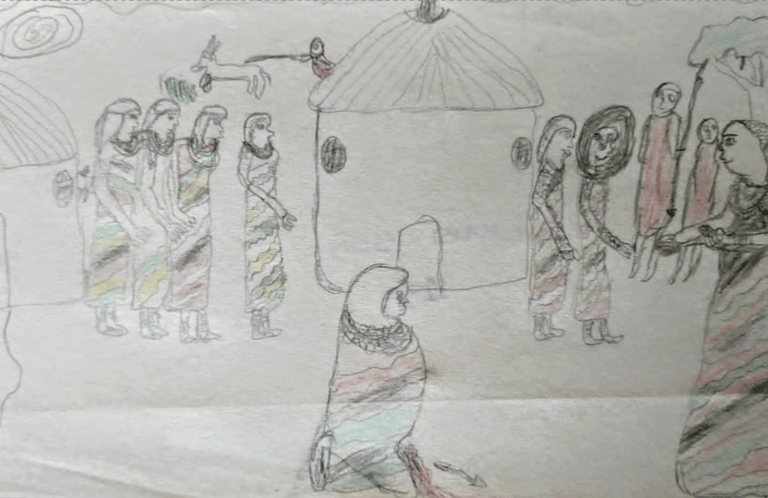
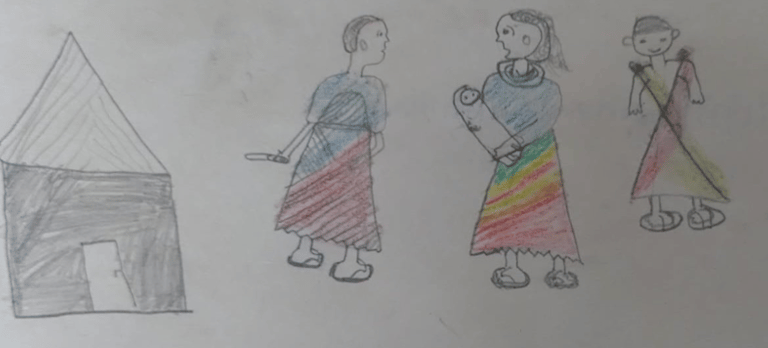
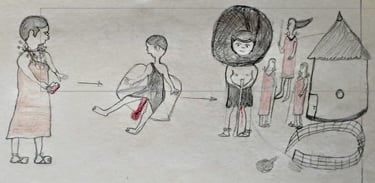
Therefore, in order to make sure to respect each participant’s boundaries, I invited each of them to draw what came to their minds when hearing the word “emurata” (circumcision in Maa). Their drawings, ranging from ceremonial elements (e.g. houses, ritual trees) to negative emotions (e.g. crying girls, hospitals), became the guiding thread for the resulting discussion: this helped make sure that participants could decide what they wanted to talk about, and helped weaken the risk of triggering their eventual traumas.
Current research on female genital cosmetic procedure
This method’s success gave me the idea of adapting it to my current research project.
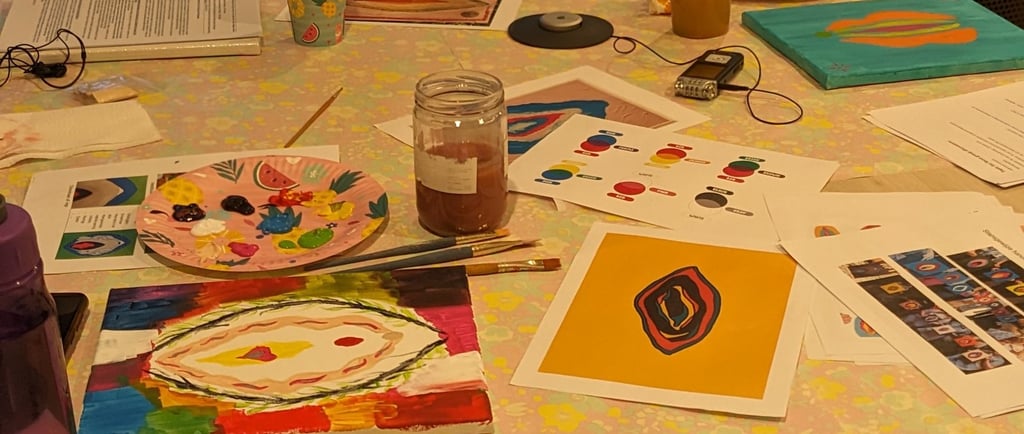
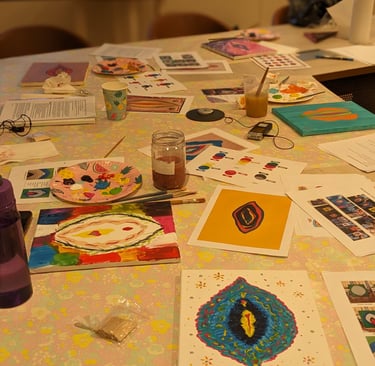
Belgian and Dutch women were invited to participate in focus groups, inspired by women’s health groups in the 1970s which aimed towards decentralizing men from the medical process. During these focus groups discussions, supported by the sexologist Evelien Luts’ expertise, I invited the participants to paint colourful vulvas.
This became valuable in two ways: first, it encouraged a natural conversation around what they were drawing – for example, if they were currently focusing on the labia minora, it enabled the women to talk about their feelings and experiences revolving around this feature. Second of all, it also helped them distance themselves emotionally from the discussion if needed, by focusing instead on their paintings.
The action of painting gave the participants an element of choice and control over the discussions, and they later described it as a beneficial addition, as it helped create a more relaxed and natural atmosphere.